
RFID Wagon Tracker
Introduction
Radio Frequency Identification (RFID) Wagon Tags are advanced electronic identification devices installed on railway wagons to enable automatic identification and real-time tracking of rolling stock. Each RFID tag contains a unique identification number that can be read wirelessly by RFID readers installed at strategic railway locations without requiring any physical contact or direct line of sight.
Indian Railways is implementing RFID technology as part of its Digital Railway initiative to improve operational efficiency, asset visibility, maintenance planning, and safety across the railway network.
What is an RFID Wagon Tag?
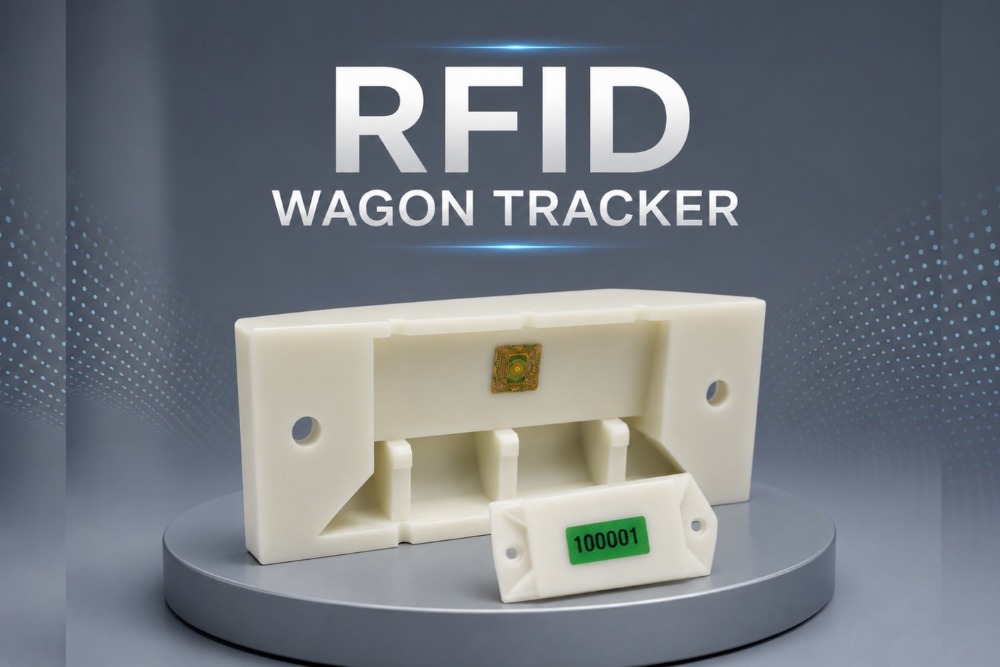
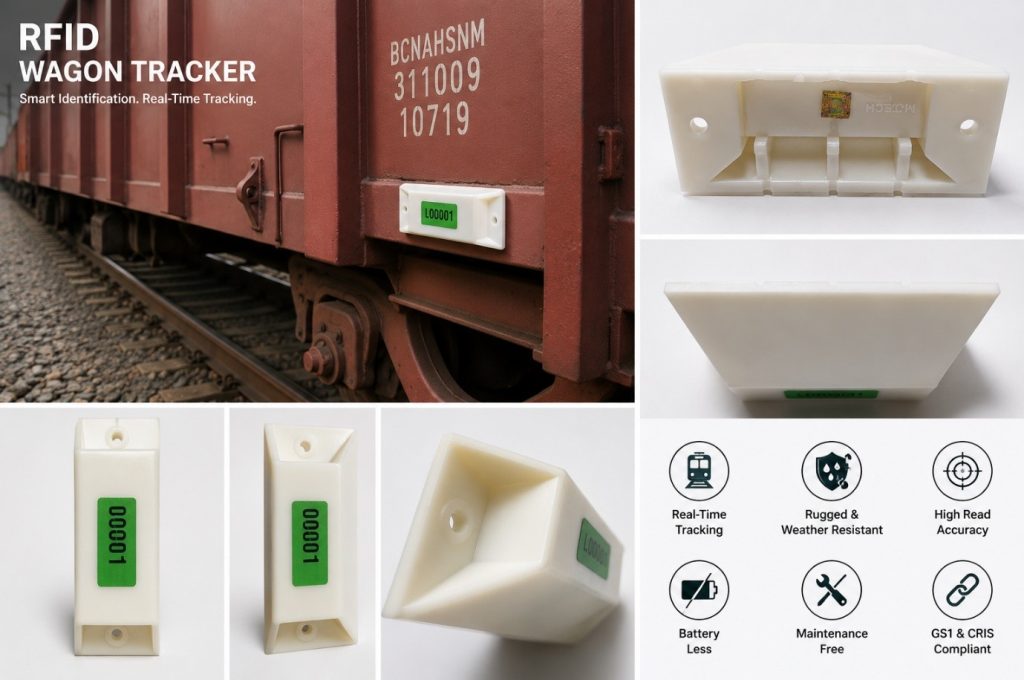
An RFID Wagon Tag is a rugged, weather-resistant electronic tag permanently mounted on a railway wagon. It stores a unique digital identity of the wagon, enabling automatic identification whenever the wagon passes an RFID reader.
The tags used by Indian Railways comply with GS1 Standards and CRIS (Centre for Railway Information Systems) specifications, ensuring interoperability and reliability across the railway network.
How RFID Wagon Tags Work
The RFID system consists of three primary components:
- RFID Tag – Fixed on each wagon and programmed with a unique wagon identification number.
- RFID Reader – Installed at stations, yards, workshops, terminals, and other strategic locations to automatically detect passing wagons.
- Central Database (CRIS Systems) – Receives data from RFID readers and updates the real-time location and movement history of each wagon.
Working Process
- An RFID tag is permanently installed on every wagon.
- As the wagon passes an RFID reader, the reader automatically captures the tag’s unique identification.
- The captured information is transmitted to the Railway’s central database.
- The system instantly updates the wagon’s location, movement history, and operational status.
- Railway officials can monitor the wagon through integrated software applications for operations and maintenance.
Why Indian Railways is Using RFID Wagon Tags
Indian Railways has adopted RFID technology to modernize rolling stock management and improve operational efficiency. The major objectives include:
- Automatic identification of railway wagons.
- Real-time tracking of rolling stock.
- Improved wagon utilization.
- Faster and more accurate train composition verification.
- Better asset management and inventory control.
- Digital maintenance planning and scheduling.
- Reduced manual data entry and human errors.
- Improved operational safety and reliability.
- Enhanced visibility of wagon movements across the railway network.
As per Railway Board guidelines, RFID tagging is being implemented across Railway-owned rolling stock, and Zonal Railways are procuring RFID tags as per CRIS specifications for installation and replacement during maintenance.
- Real-time visibility of wagon movement.
- Faster identification of wagons.
- Reduced detention time.
- Improved logistics planning.
- Better fleet utilization.
- Automatic maintenance history tracking.
- Timely preventive maintenance.
- Easy identification of wagons requiring repairs.
- Reduced maintenance delays.
- Better lifecycle management of assets.
- Accurate identification of rolling stock.
- Improved monitoring of wagon movements.
- Better compliance with maintenance schedules.
- Enhanced operational reliability.
Applications
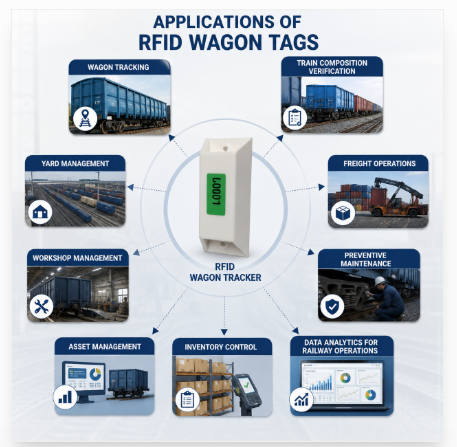
RFID Wagon Tags are widely used for:
- Wagon tracking
- Train composition verification
- Yard management
- Freight operations
- Workshop management
- Preventive maintenance
- Asset management
- Inventory control
- Data analytics for railway operations
Product Features
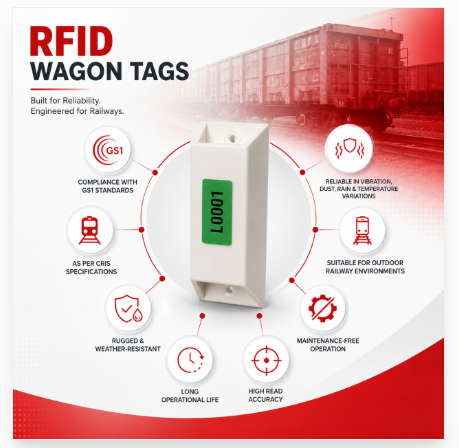
Our RFID Wagon Tags are designed specifically for the demanding railway environment and offer:
- Compliance with GS1 Standards
- Manufactured as per CRIS Specifications
- Rugged and weather-resistant construction
- Long operational life
- High read accuracy
- Maintenance-free operation
- Suitable for outdoor railway environments
- Reliable performance under vibration, dust, rain, and temperature variations
Supporting Digital Railways
RFID Wagon Tags are an essential component of Indian Railways’ digital transformation, enabling intelligent asset tracking, predictive maintenance, and data-driven railway operations. By replacing manual identification methods with automated RFID technology, Indian Railways is improving efficiency, transparency, and service reliability across its freight network.